


Chapters 3, 4 and 5 • Review your notes, videos and assigned textbook pages.
Open Test 2 Review
Chapter 5 Videos
Condensation & Clouds
Condensation occurs when water vapor changes to a liquid. For condensation to take place, the air must be saturated and there must be a surface on which the vapor can condense. In the atmosphere, tiny particles called cloud condensation nuclei provide surfaces on which water vapor can condense. Hygroscopic nuclei are water-seeking particles; salt is one example.
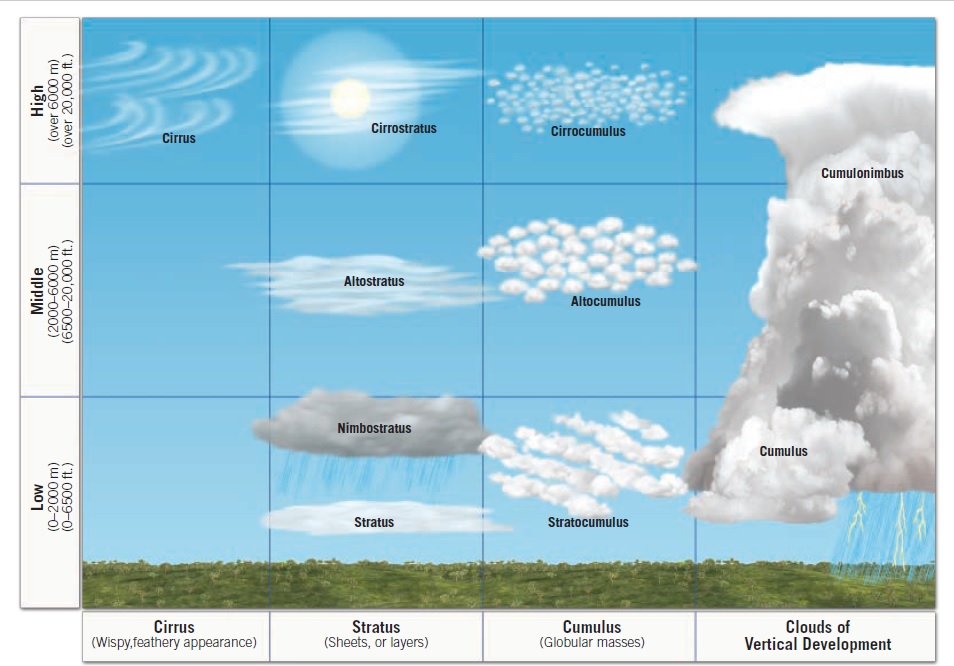
Clouds are visible aggregates of minute water droplets, tiny ice crystals, or both. Clouds are classified primarily by form and height.
NWS JetStream: Clouds NOAA: Ten Basic Clouds Clouds Out My Window PDFCloud Classification
Cirrus
High, white and thin.Cumulus
Globular, individual cloud masses.Stratus
Sheets or layers.Nimbo / Nimbus
Indicates a rain-producing cloud; typically dark gray.Cloud Heights
- High: bases above about 6,000 meters (20,000 feet) — think cirrus.
- Middle: about 2,000–6,000 meters — the prefix alto-.
- Low: below about 2,000 meters (6,500 feet) — think stratus.
Based on form and height, ten basic cloud types are recognized, including cirrostratus, altocumulus and stratocumulus. Cumulus and cumulonimbus are clouds of vertical development and can grow into towers or domes.

How Precipitation Forms
For precipitation to form, cloud droplets or ice crystals must grow large enough to survive their descent to the ground.
Bergeron Process
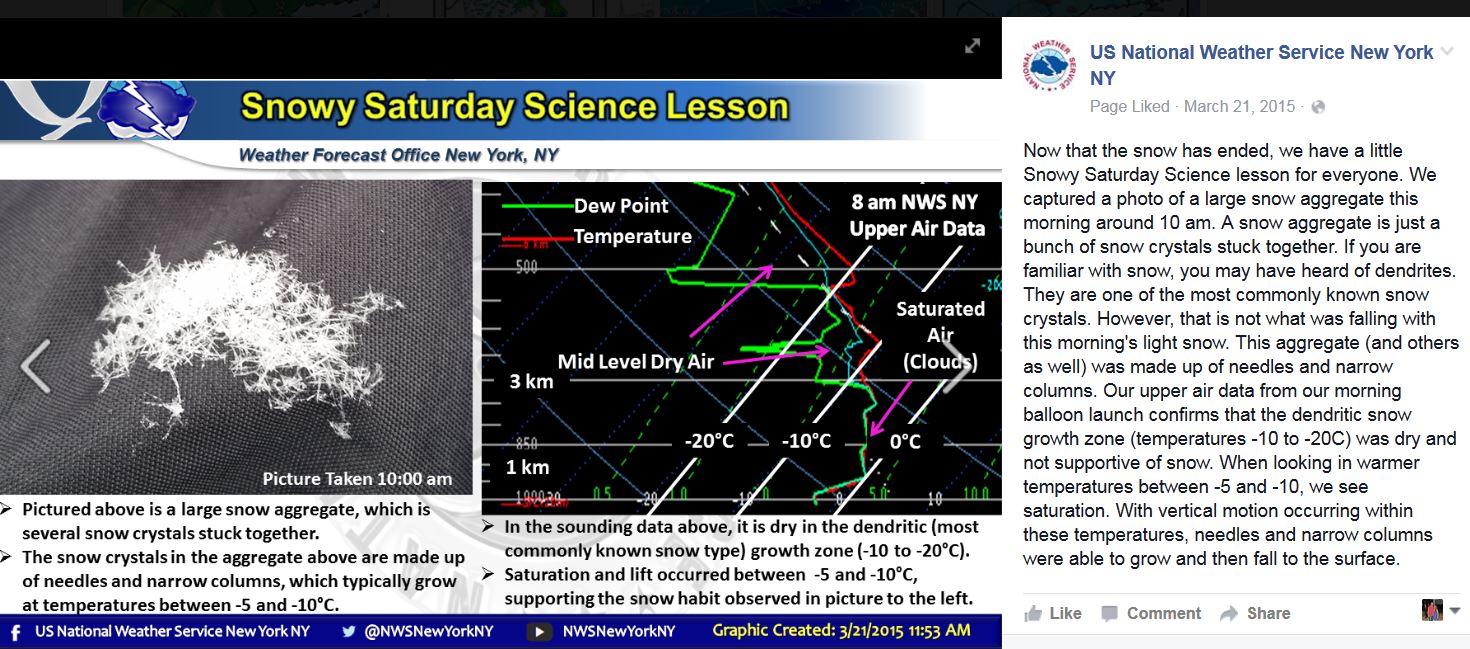
Produces precipitation in cold clouds and is especially important in the middle latitudes. Supercooled water remains liquid below 0°C. Freezing nuclei help initiate ice formation.Collision-Coalescence
A warm-cloud process especially important in the tropics. Larger droplets fall faster and collide with and collect smaller droplets, allowing the drops to grow.Forms of Precipitation & Winter Weather
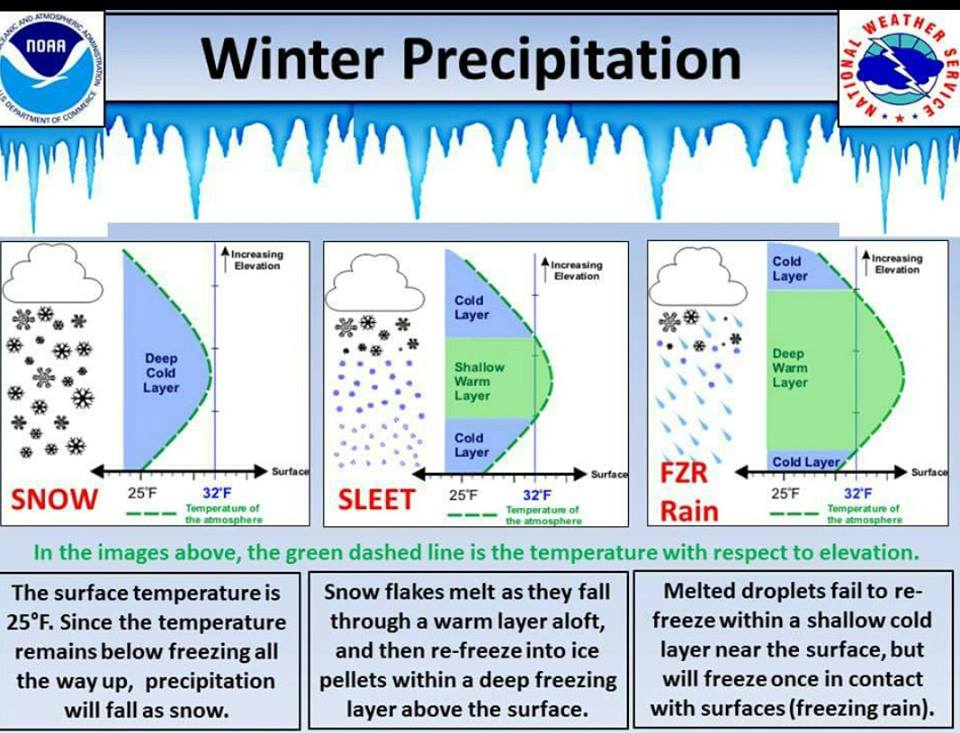
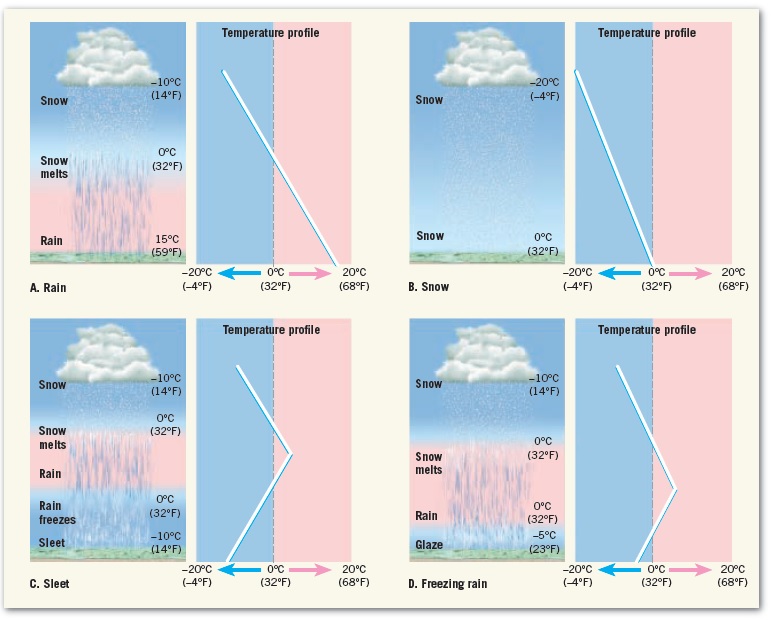
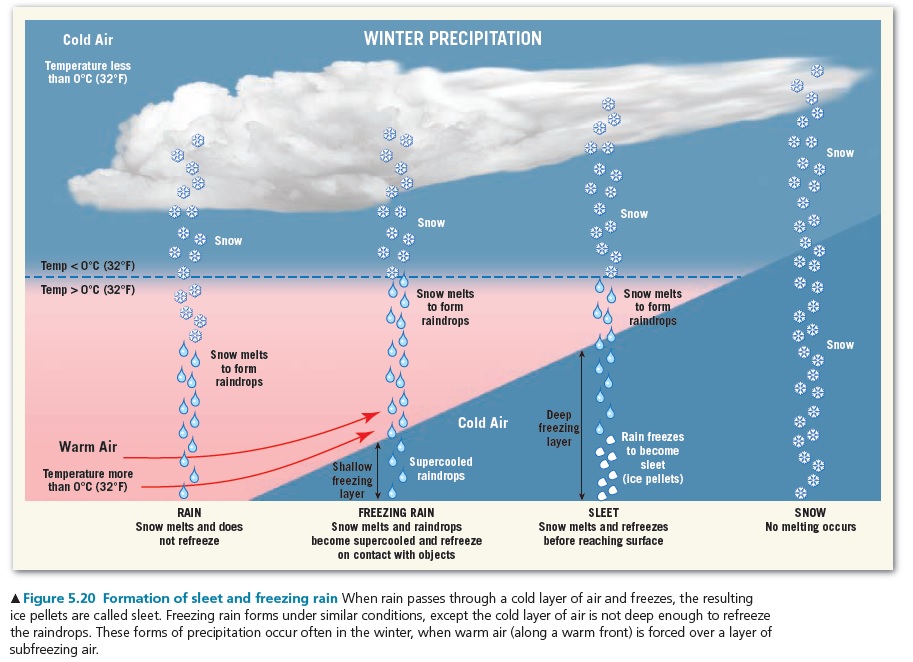
The course material discusses rain, snow, sleet, freezing rain/glaze, hail and rime. The actual precipitation type reaching the ground depends on the temperature structure through the atmosphere, not simply the surface temperature.
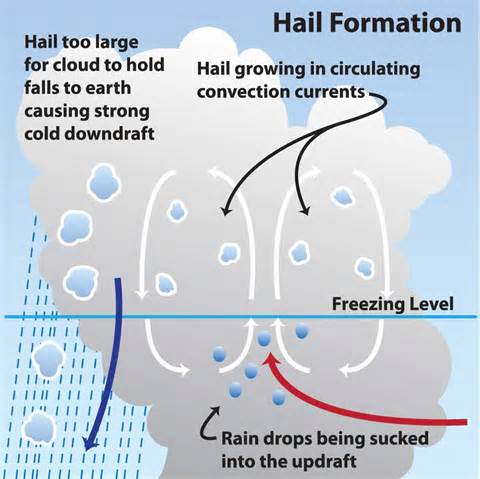
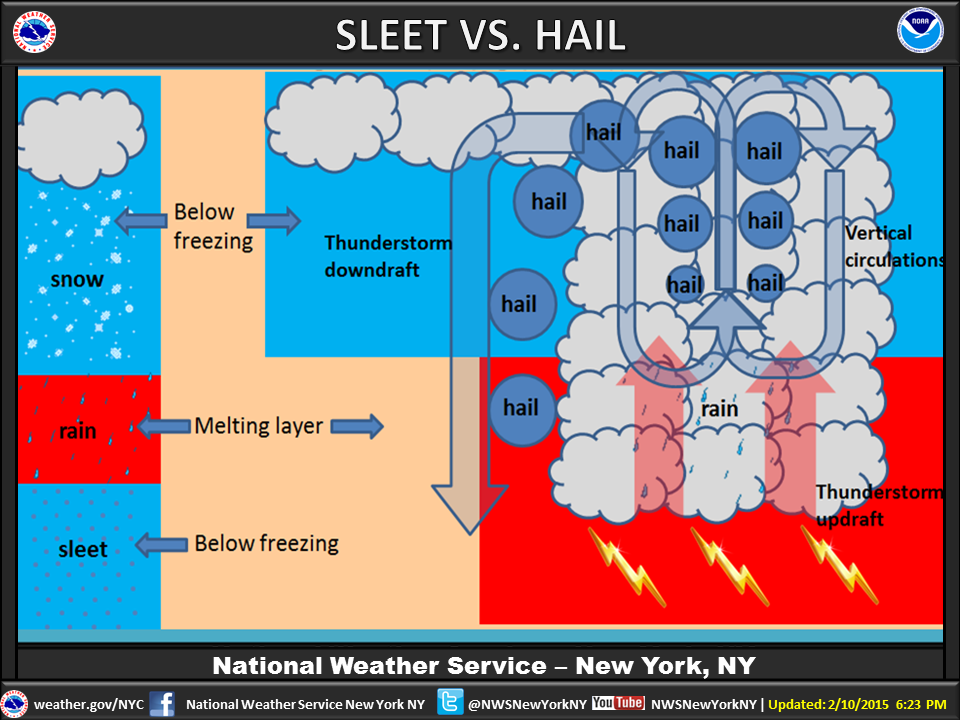
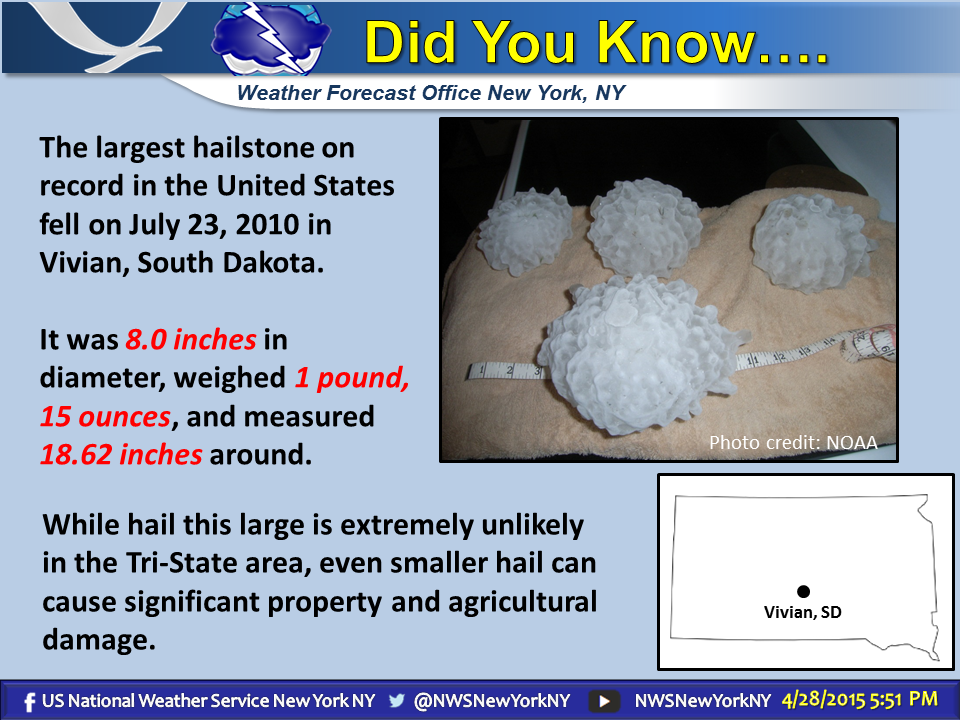
Winter Sounding Examples
NOAA Skew-T Samples Ice Pellets Sounding Snow Sounding Freezing Rain SoundingDoppler Radar
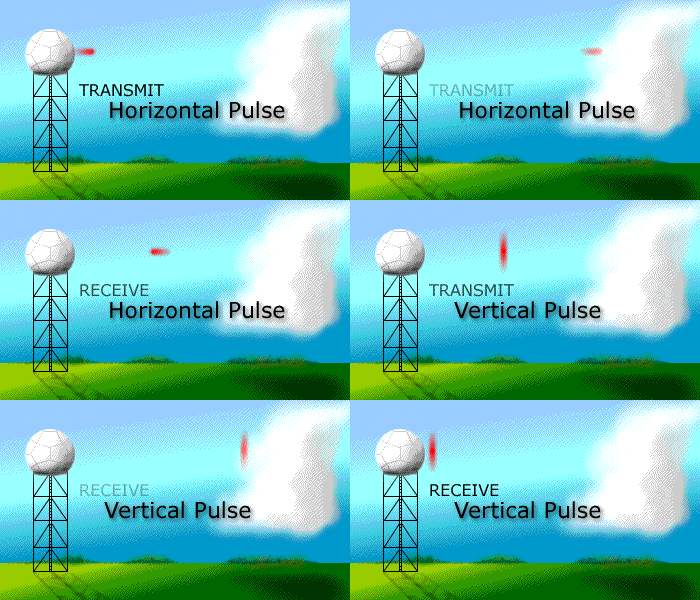
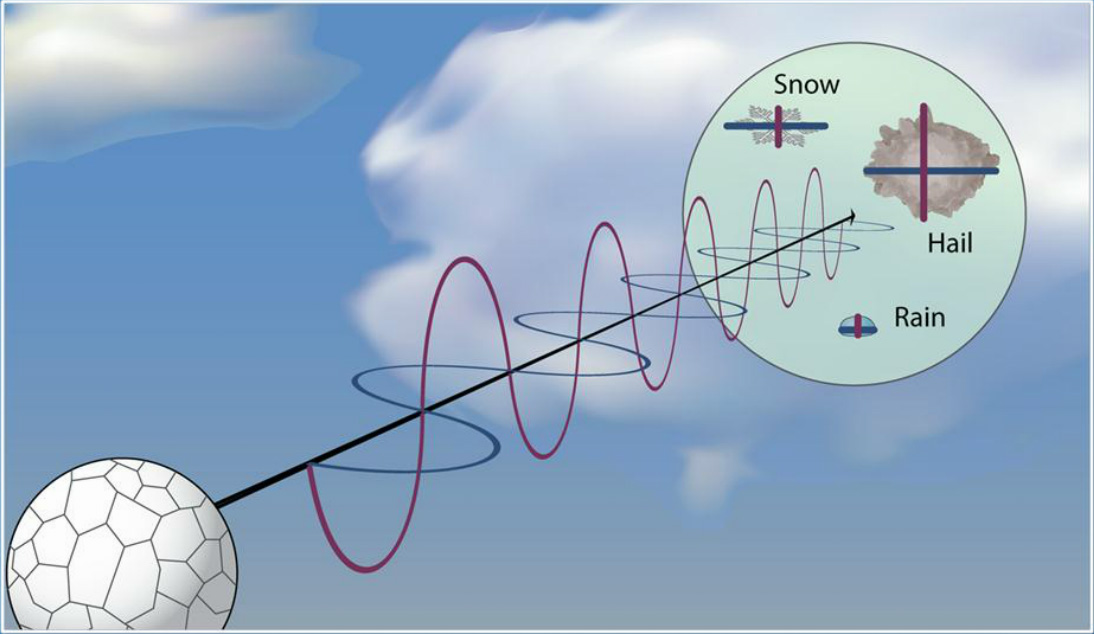
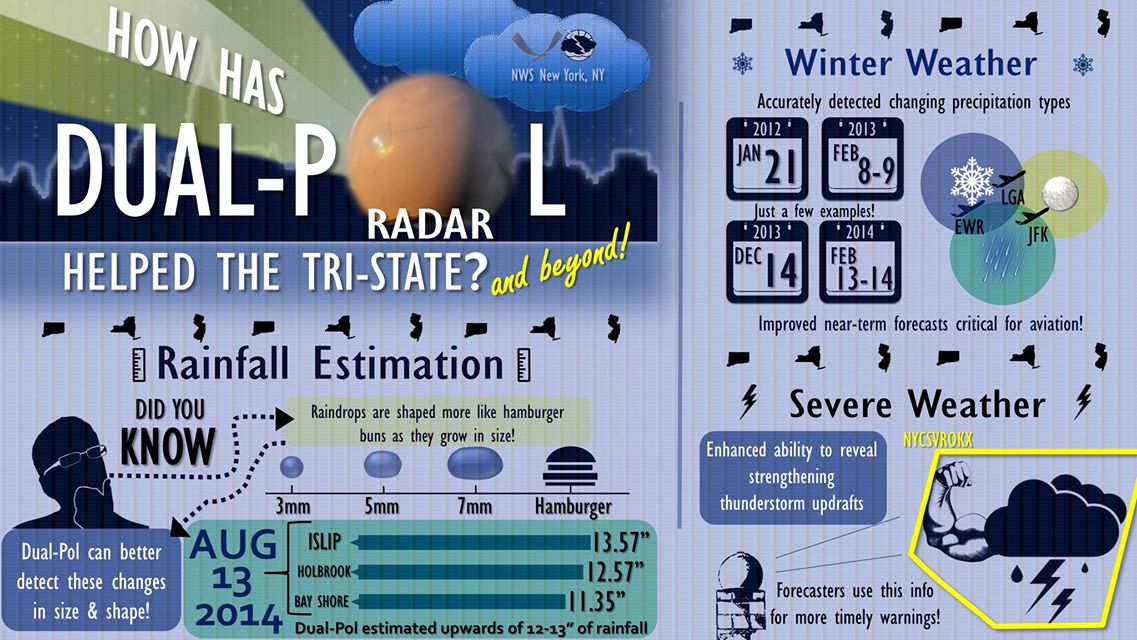
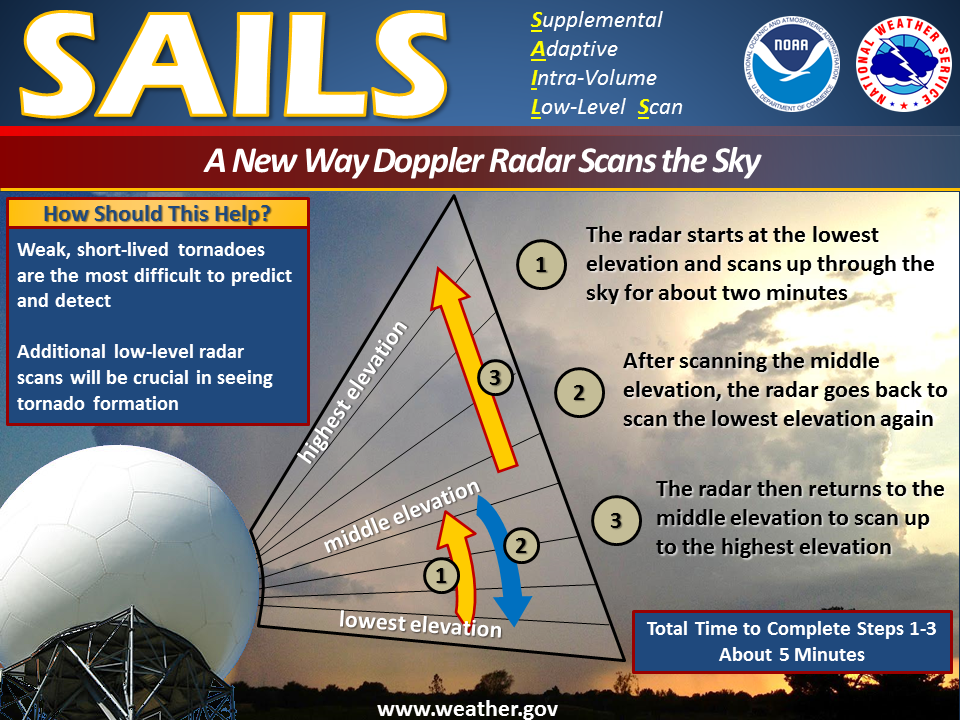
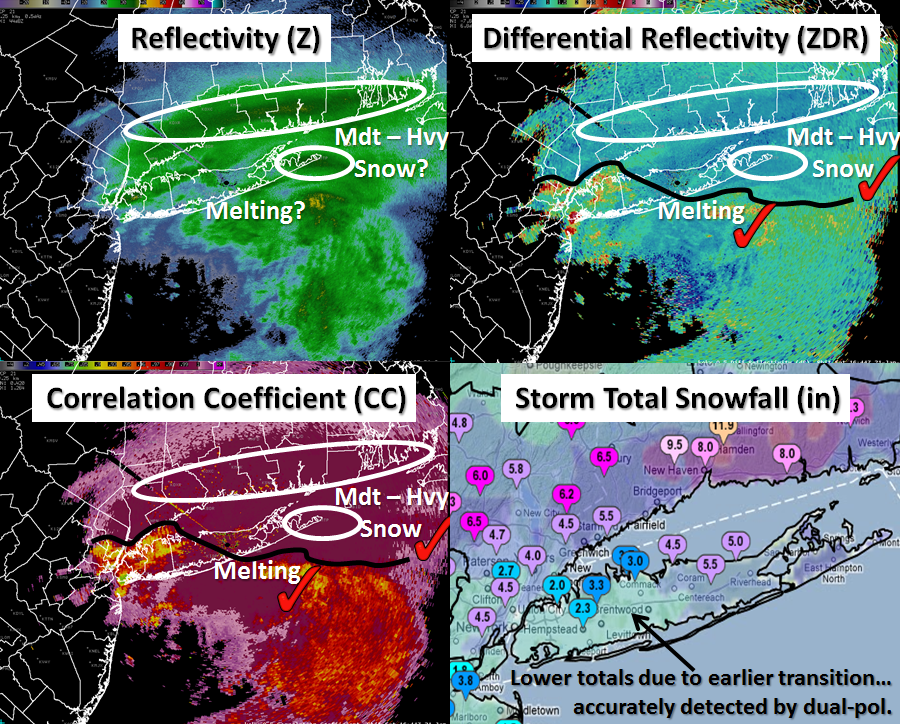
These course graphics illustrate conventional Doppler radar, dual-polarization radar and examples of radar appearance during different precipitation regimes.
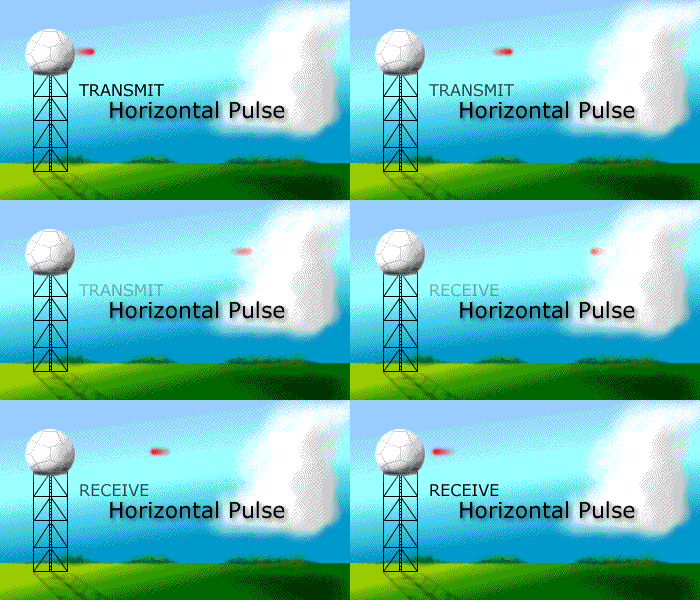
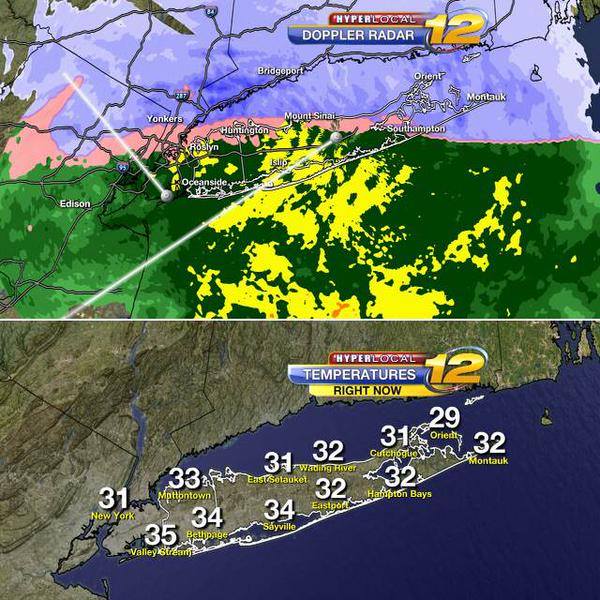
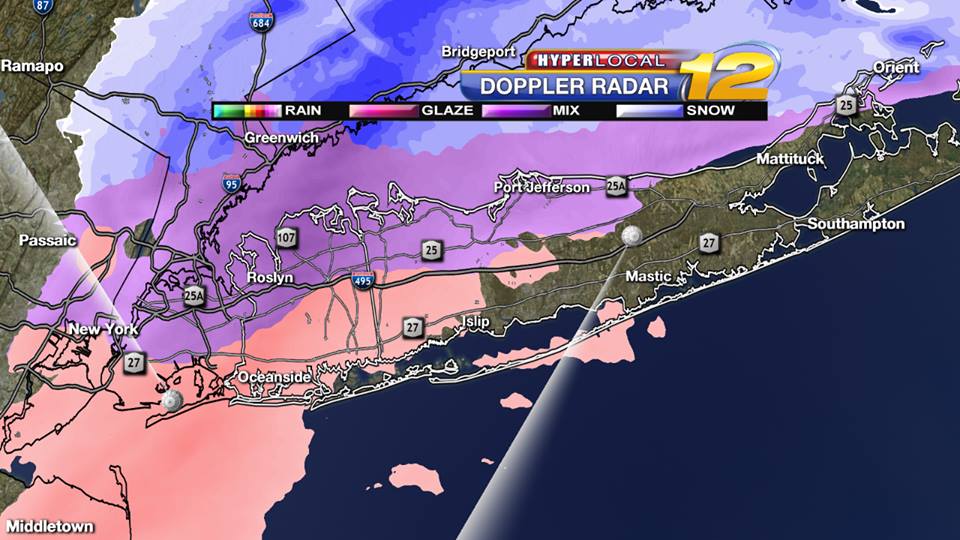
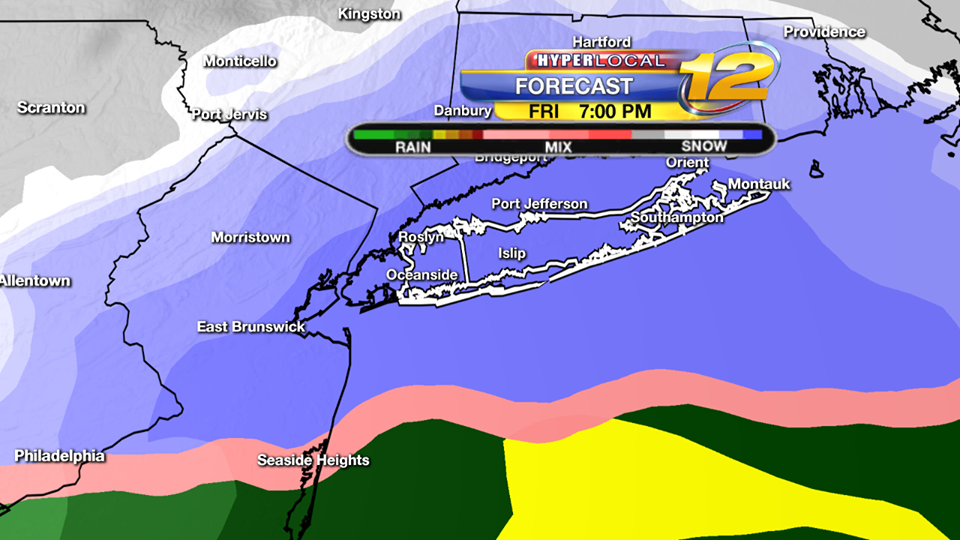
Long Island Snow Example
Islip, New York — January 21, 2012: 3.6 inches of snow.
Measuring Rain & Snow
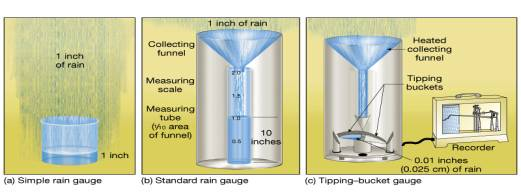
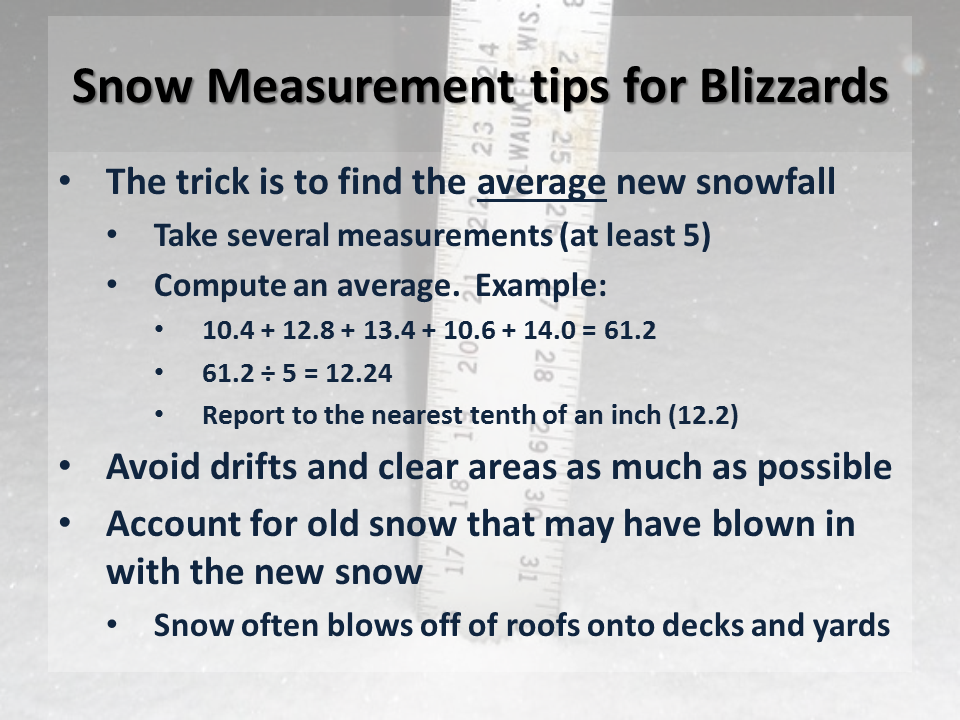
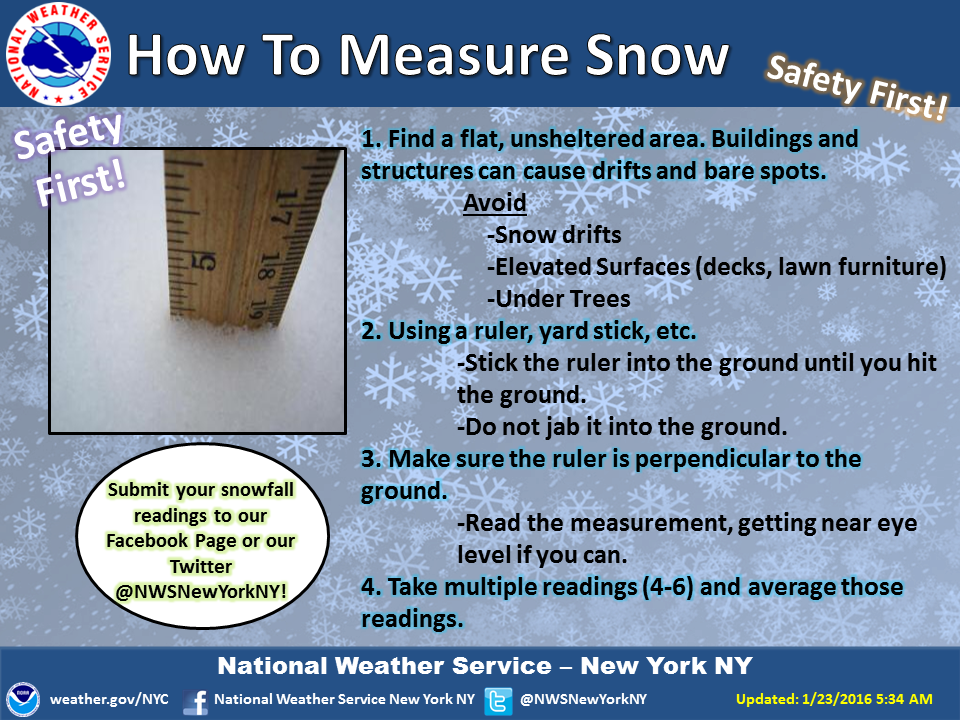
Rain is commonly measured with a standard rain gauge. Tipping-bucket and weighing gauges can record precipitation amount and intensity. Common snow measurements include snow depth and liquid-water equivalent.
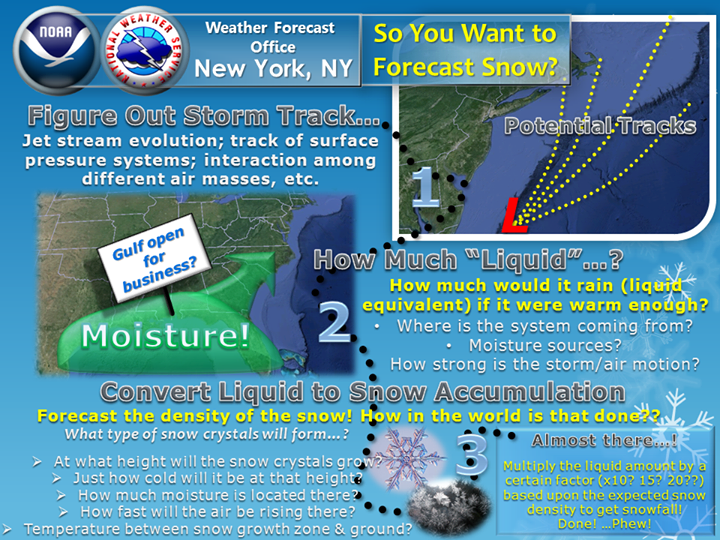
The source material uses a general 10:1 snow-to-liquid ratio as a rough example when exact information is unavailable, while also illustrating that the ratio can vary with temperature and snow characteristics.
Fog, Dew & Frost
Fog is a cloud with its base at or very near the ground. The chapter discusses radiation fog, advection fog, upslope fog, steam fog and frontal fog.
Radiation Fog
Forms as the ground and adjacent air cool by radiation.Advection Fog
Forms when warm, moist air moves over a colder surface.Upslope Fog
Forms when humid air moves upslope and cools adiabatically.Steam / Frontal Fog
Steam fog develops when water vapor over warmer water condenses in colder air. Frontal fog can form as precipitation evaporates and saturates air near the surface.Dew is condensation on objects cooled below the dew point. White frost (hoar frost) forms when the dew point is below freezing.
Weather Modification
Intentional weather modification is deliberate human intervention intended to influence atmospheric processes. Your Chapter 5 material discusses approaches including cloud seeding, fog and cloud dispersal, hail suppression and frost prevention.
Chapters 3, 4 and 5
Go to Test 2 Review